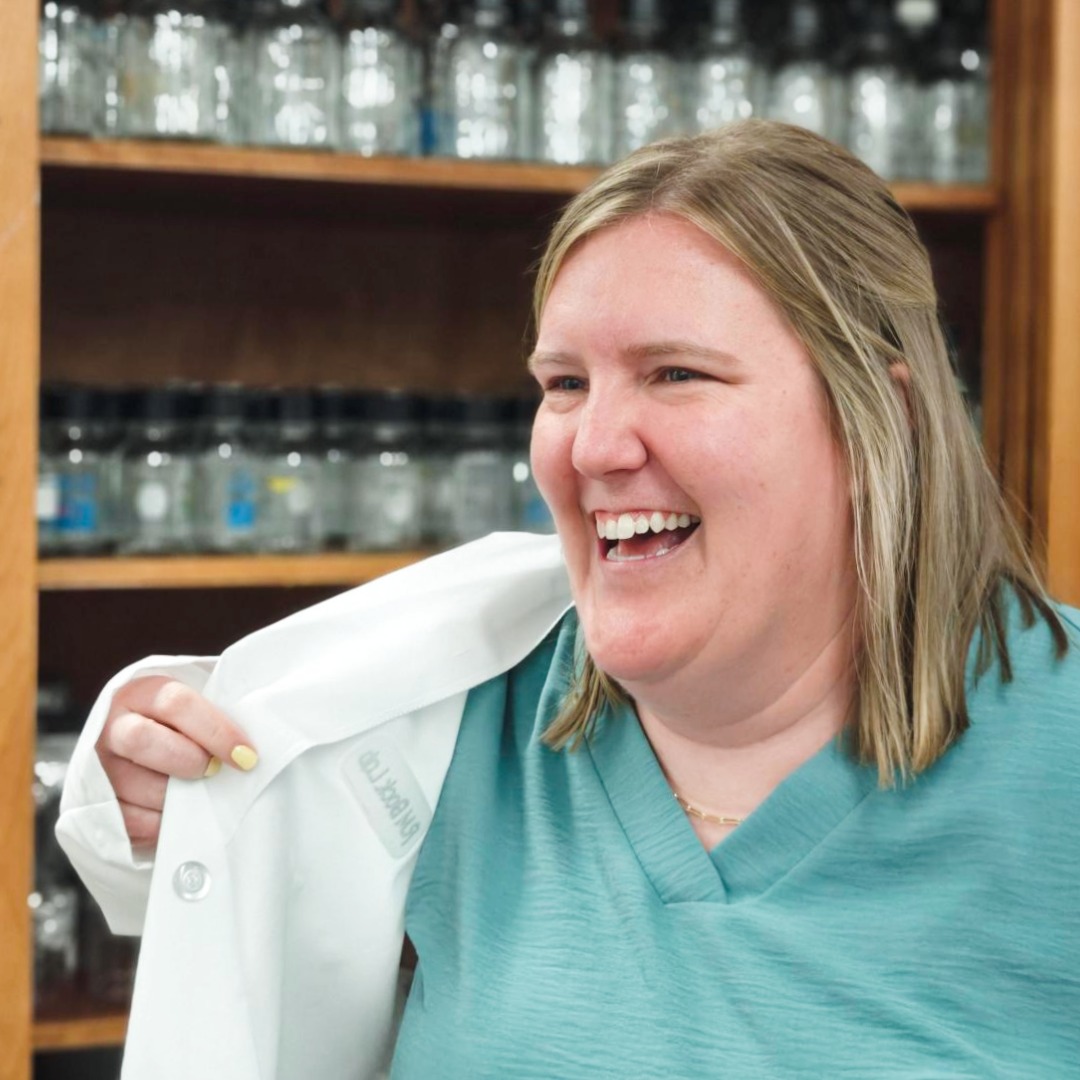
 Dr. Emily Albright works at the Institute for Molecular Virology (IMV) in Prof. Rob Kalejta’s laboratory. She studies Human Cytomegalovirus (HCMV), a herpesvirus that infects at least 50% of the world’s population and then can persist in people’s bodies for the rest of their lives. Most healthy people never know they have it, but in newborns, transplant recipients, and immuno-compromised people, HCMV can cause severe disease.
Tell us about your background and personal history.
I grew up in the suburbs of Chicago and originally became interested in science through genetics and molecular biology classes in high school. We were also talking a lot about the HIV/AIDS pandemic at the time, and our school had a relationship with a heavily impacted community in Zambia. Those experiences planted an early understanding of how a virus can ripple through entire societies.
As an undergrad at North Central College in Naperville, IL, I joined a research lab early on. I got completely hooked on doing experiments and trying to answer questions nobody knew the answer to yet. I also spent a summer doing research at MIT with Graham Walker and Susan Cohen, getting to experience what life was like in a big research lab. Most of my undergraduate work was in yeast and bacteria studying cell cycle regulation, DNA repair, and prions. My undergrad advisor, Steve Johnston, had a virology background and introduced me to how much fundamental molecular biology came from studying viruses.
When I started graduate school at UW-Madison, I rotated in several microbiology labs studying different bacteria and viruses, but I ended up being drawn to virology. My PhD work focused on understanding how both HCMV and cellular factors control the chromatin structure on the viral genome to regulate viral gene expression.
What does a typical day in the lab look like for you?
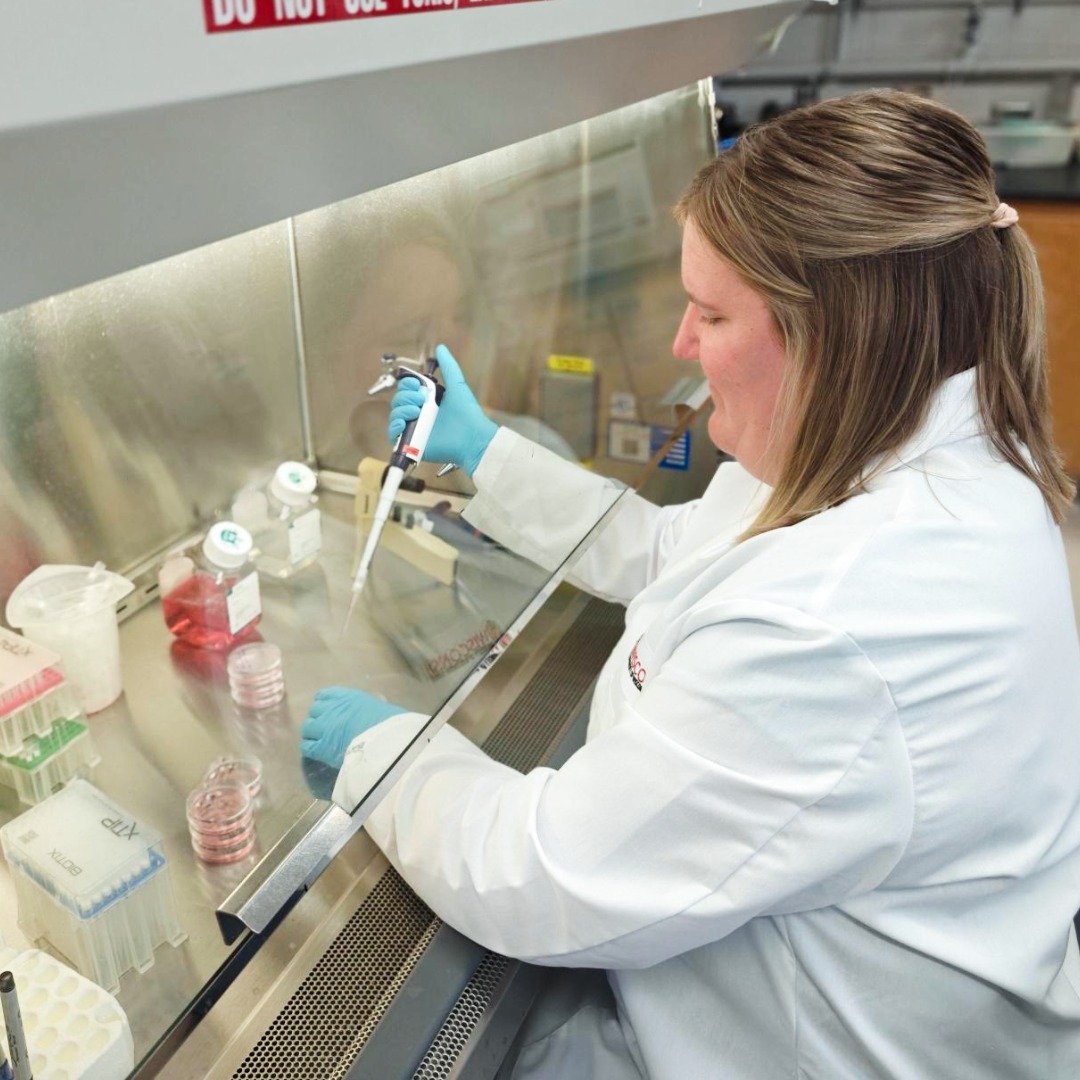 One of my favorite parts of my job is that there’s a lot of variety day-to-day. Working in the lab can be a lot of things, but it’s definitely never boring!
Prof. Rob Kalejta’s lab studies HCMV to understand how cells and viruses interact to control HCMV latency/reactivation, a big cause of birth defects (see Sidebar) and organ transplant failures.
I spend a lot of time in the lab doing experiments. That could include maintaining cell cultures, infecting cells, processing samples, running assays, troubleshooting experiments, or doing molecular biology work. I also often spend part of my day analyzing data, making figures, reading papers, or writing.
I work closely with undergraduate and graduate students as well, which is one of my favorite parts of the job. Depending on the season, a good chunk of my time goes into training students on techniques, helping them think through experiments, troubleshooting projects, and interpreting data.
I also manage many of the day-to-day logistics of running the lab, which can include things like ordering reagents, making sure lab chores get taken care of, maintaining and troubleshooting equipment, ensuring we’re complying with biosafety and chemical safety standards, and collaborating with the Bock Labs team to make sure administrative things get done.
What’s something you love about your research?
My favorite projects look at how the virus and host cell interact and adapt to one another. Herpesviruses establish a lifelong infection in their hosts. They need to have much more sophisticated interactions with host cells than other viruses that cause short-term infections. Because of that, persistent viruses can have strategies that feel non-intuitive but are actually so cool!
One of my favorite projects helped solve a fascinating paradox: Why would a virus produce a protein that stops its own replication?
At first glance, it sounds like a dead end, but HCMV is a master manipulator. I discovered that the virus senses its environment to flip between two distinct modes. In an active mode, the virus hijacks the host cell’s own signaling lines to turn on its gene expression and multiply. Under different conditions, it changes gene expression to pump the brakes on that same pathway.
It sounds a little silly, but one of the things I learned from studying herpesviruses is that they are very successful viruses because they’ve figured out balance and nuance and how to adapt especially well. I think those are all good lessons for people too.
What is the hardest part of your job?
I think one of the hardest parts of research is figuring out which questions are worth pursuing. A fun thing about science is that answering one question often allows you to ask a whole new set of questions. But you can’t realistically work on everything and need to learn to pick the best questions.
Discerning when to persist through setbacks, when to pivot, and where to best invest limited time and resources can be really challenging. I think this is especially hard when you’veworked on a project for a long time!
What do you like to do when you aren’t in the lab?
 Outside of the lab, I spend a lot of time with friends, family, and being involved in my church community. I volunteer as a student ministry leader, mentor a group of high school students,and lead mission trips with middle school students. I also help coordinate volunteer opportunities in collaboration with local nonprofit organizations around Madison and Dane County.
 I also love to travel, whether that’s exploring somewhere new or revisiting places and people that I care a lot about. One unexpected gift of a career in science has been the opportunity to build relationships with people all over the country and the world. Some of my favorite trips have been reconnecting with friends I’ve met through research.
 I like learning new things, so I’m always reading or listening to podcasts. I really like making things too. Whether that’s baking (sometimes even virus-themed!) or figuring out how to recreate something cool I saw on Pinterest. Even though I’ve lived in Wisconsin for a long time, I’m still a loyal fan of Chicago sports and I love to relax by going for a long walk by the lake while listening to a Cubs game.
What advice would you give students interested in research?
Learn to be a lifelong learner. A lot of people think of science as a collection of facts, but fundamentally it is a systematic process for figuring things out. In research, you’re constantly learning new things and re-evaluating your previous conclusions based on them. If you only love the outcome and not the process, research can be a rough ride.
I also think it’s really important to develop resilience. Research involves a lot of failing! You’re constantly working at the edge of your own knowledge and often at the edge of what anybody knows! In that case, no one knows how the experiment is “supposed” to turn out. That is what makes research exciting, but it can also be uncomfortable. Learning how to think through problems and adapt when things don’t work is one of the most valuable skills you can develop.
HCMV: A leading cause of birth defects in the United States
When a mother is infected with Human Cytomegalovirus (HCMV), the virus can cross the placenta and infect the baby (referred to as congenital HCMV). Congenital HCMV causes permanent disabilities or birth defects in 1 out of every 1,000 pregnancies in the United States. Common problems stemming from congenital HCMV include hearing or vision loss, developmental disabilities, and neurological problems, such as seizures.

Stopping congenital HCMV is difficult because the virus is so common and can infect a mother without any symptoms before lying dormant for years. In 2011, the United States Congress passed a resolution naming June National CMV Awareness Month (PDF) and various medical organizations and non-profits have been working to get the word out about this virus. Screening for congenital CMV has expanded in recent years, with goals of improving patient outcomes. In May of 2026, the State of Wisconsin made CMV infection in infants a reportable disease.
Research, like the work that Emily does in the Kalejta Lab, helps understand how the virus hides from the body’s defenses, gets reactivated, and causes disease. Doctors and scientists need additional strategies to stop HCMV. Currently, there is no vaccine and anti-HCMV antivirals are toxic, can cause severe side effects, and may promote the production of resistant strains of the virus.